
How good are our decisions when it comes to rejecting a take-off?
In the typical simulator RTO drill, we shine. But outside the training environment, studies, incidents, and accidents show evidence of systematic problems.
- Delayed recognition of severe conditions like unreliable airspeed
- Incomplete understanding of manufacturer’s message inhibit logic
- Tendency of being stop-minded at high speeds, contrary to recommendations
- And, most severe, unwarranted take-off aborts after V1
ADMT, by letting pilots take the actual decisions, prepares them for one of the greatest challenges in commercial aviation: The STOP or GO decision in a take-off at high speed, and how to lay the foundation for a good outcome in the face of the startle-and-surprise effect. Benefits will include improved system knowledge, risk awareness, and general decision making skills in complex and ambiguous situations.

The RTO decision is
time critical,
irreversible,
and it is virtually the only situation where it is impossible to get a second opinion.
Even if, as we hurriedly pull back on the thrust levers, the realization sets in that the RTO was not the safest course of action, we are now committed to stop.
These challenges are real. And nevertheless: most of the time, we just train the drill, but we do not practice the decision making. Virtually all simulator exercises have the goal to establish and check the RTO drill. We tell pilots to be go-minded, but in the sim, any irregularity during the take-off run inevitably requires a STOP decision – because that is what is required for the completion of the mission or check event.
If we train like this for years, a strong mental connection, almost a reflex, is established: When something unusual happens during the take-off run, do the drill and stop.
ADMT is a new way of flight crew training – efficient, adaptable, online or offline, as part of a pre-session briefing or in the classroom. And, it is so much less costly and more versatile than training decision making competencies in a full flight simulator. A 90 minute work shop will give up to 10 participants deep insight into the subject, engage them, and prepare them better for whatever their future take-offs may challenge them with.

ADMT is the result of two years of research and a four-digit number of hours of programming. More than 300 RTO incidents and accidents were sighted and analyzed.
While ADMT does not focus on the RTO drill, it provides decision making challenges and analysis that a full flight simulator can’t.
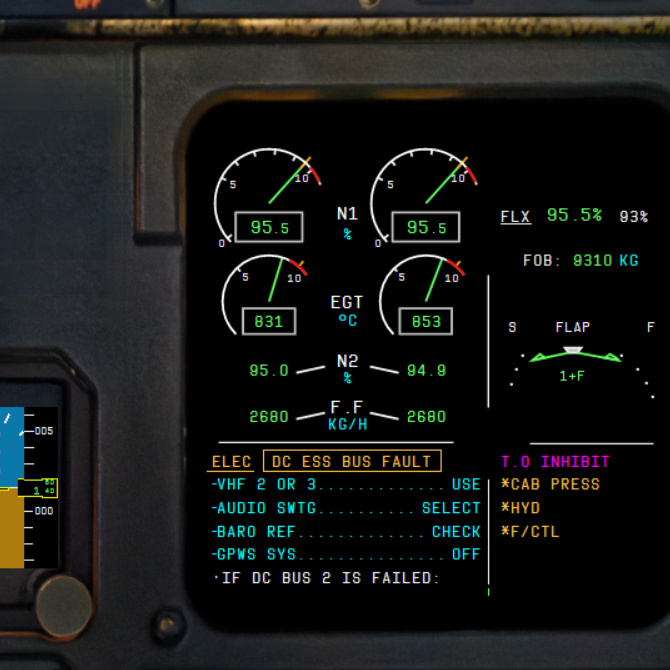
Hundreds of type specific malfunctions (presently modelled for A320 family, Boeing 777, and Embraer E195)

Limit exceedances, indication problems, unusual noises, cabin calls, observed faults, windshear, and much more selectable.
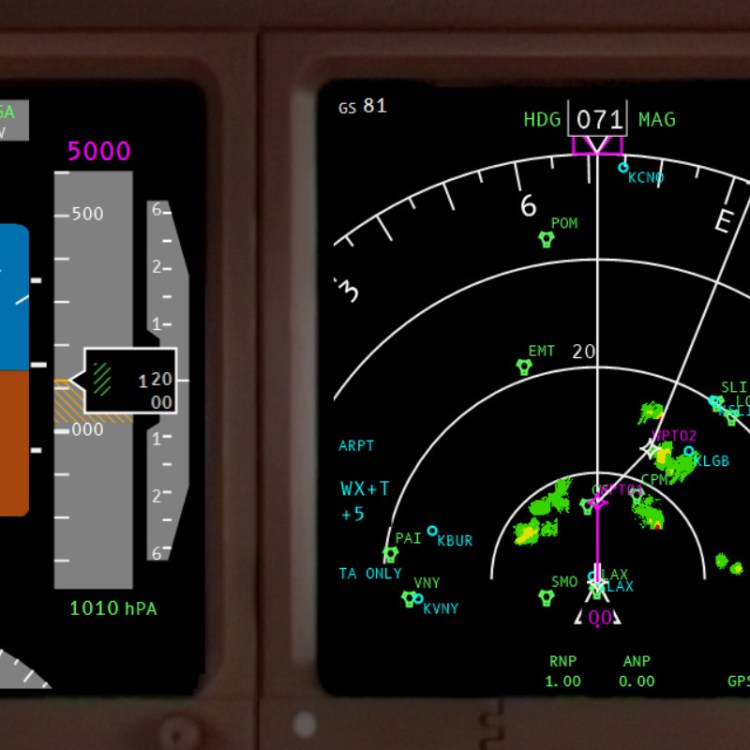
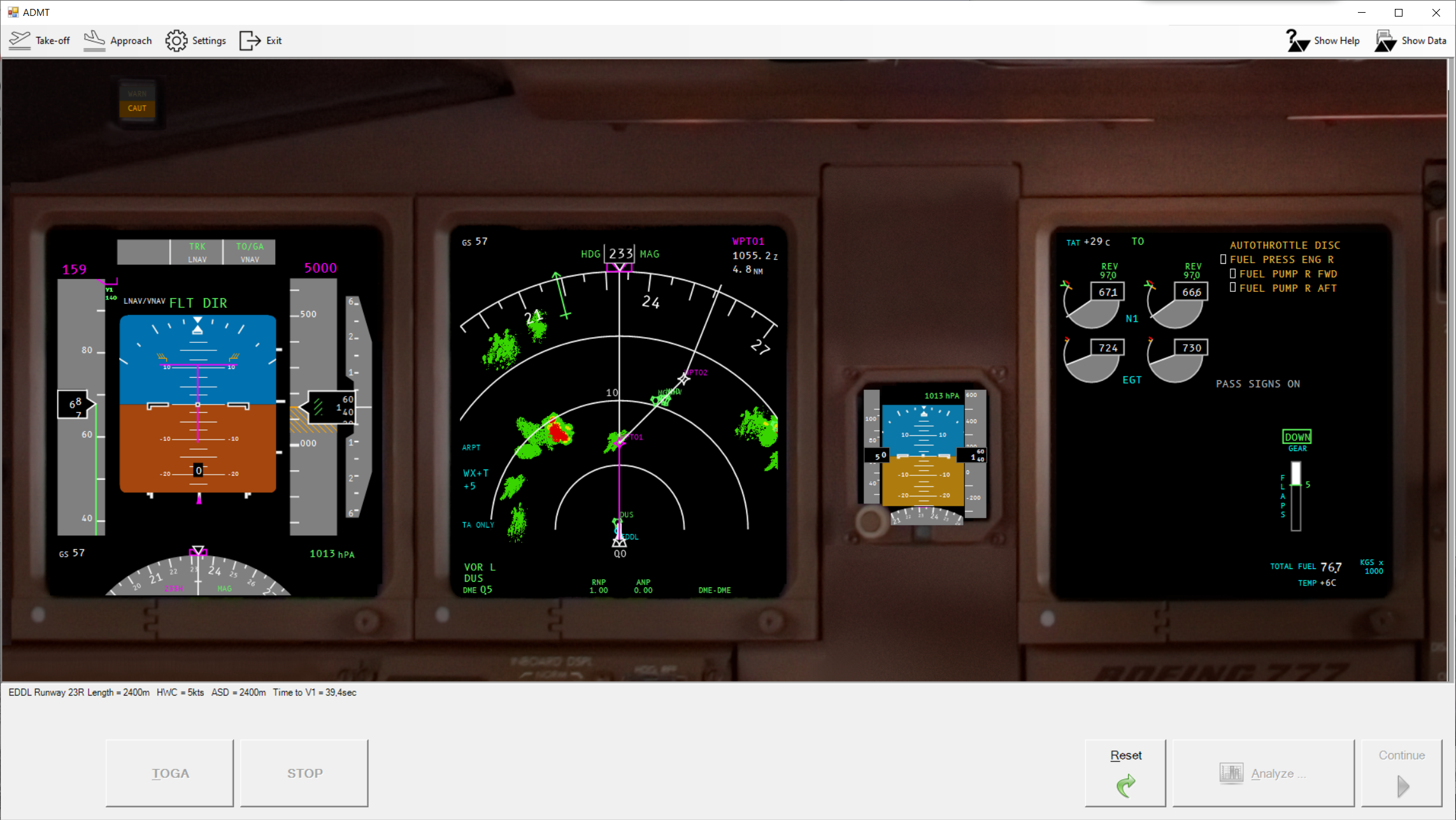
Environmental conditions and weather radar simulated.

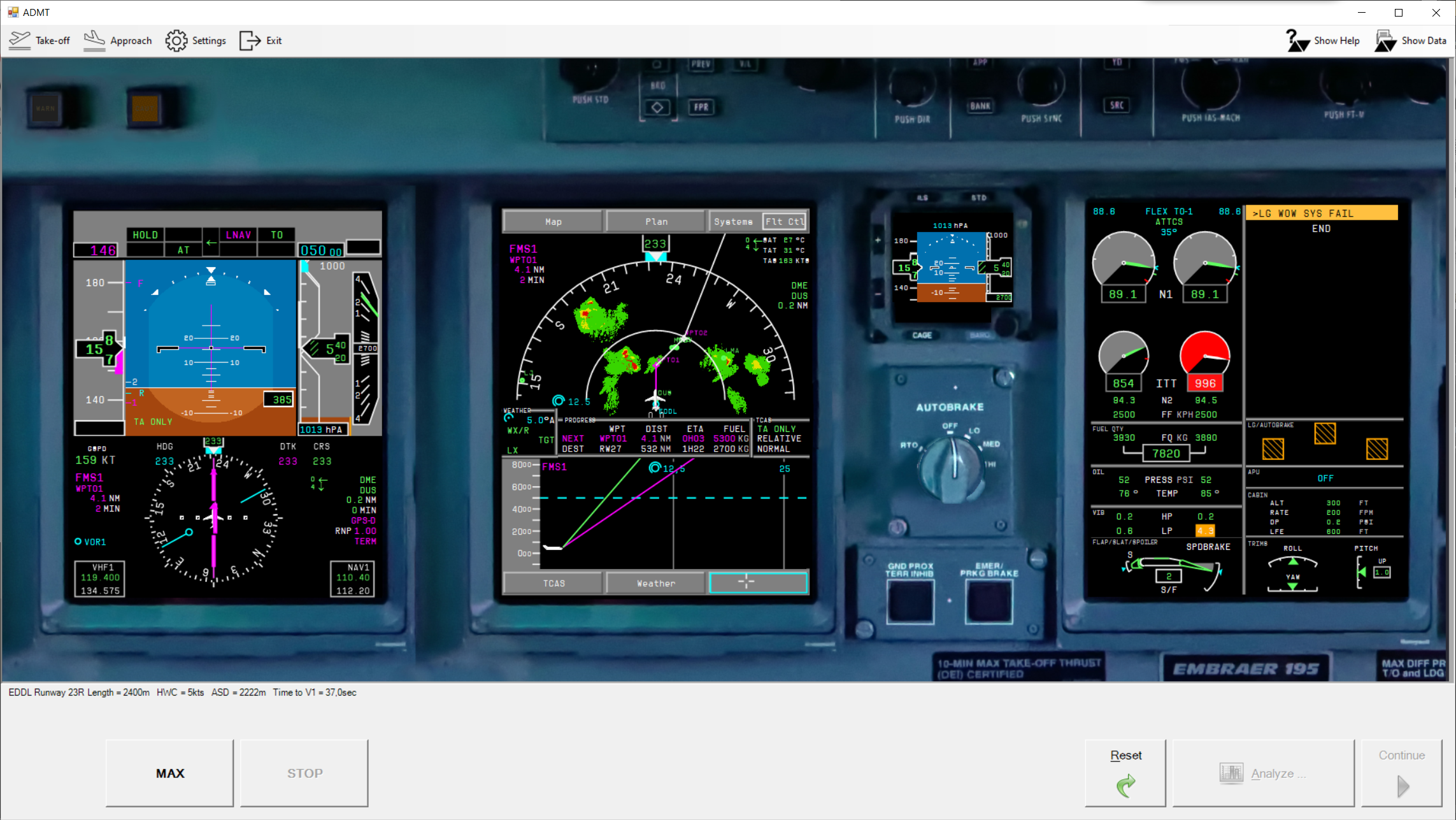
Detailed, interactive analysis with system and malfunction information, visualization of kinetic energy, inhibits, reaction times and more.
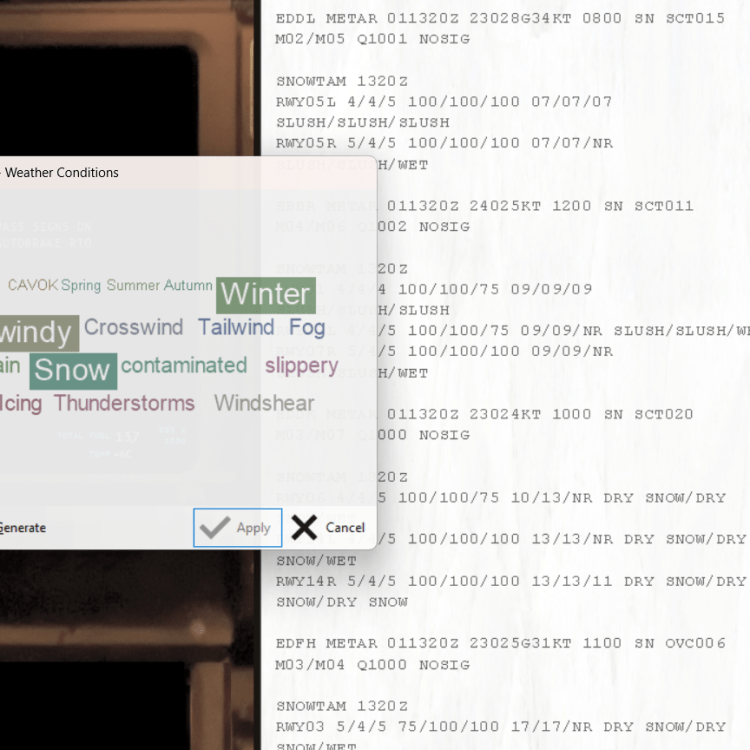
Generate complex weather scenarios without entering a single number.
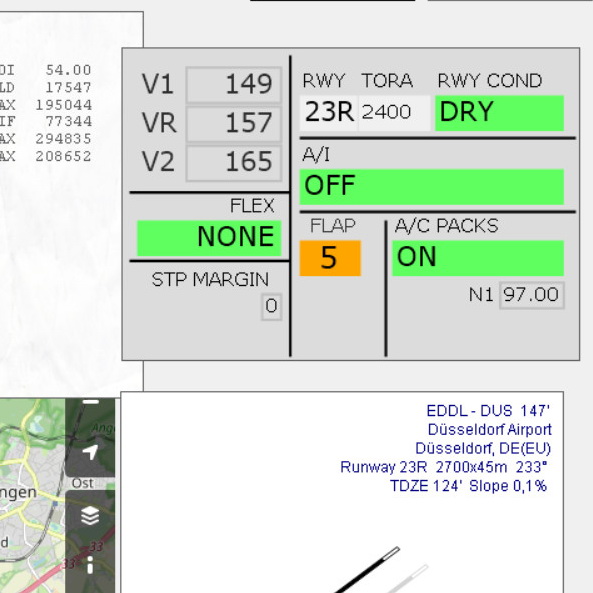
Worldwide runway database, realistic take-off performance data.

Experience and understand message inhibits and system behaviour with relation to speed and kinetic energy.
Message inhibits are designed to provide intuitive guidance: If it get’s noisy, reject. But if you look closely, it’s not always quite that easy. Knowing what to expect helps to build confidence in the aircraft and in one’s own abilities to judge correctly.

Identify high risk scenarios where our intuition may lead us in the wrong direction.
Even with good system knowledge, there are situations where it is very easy to come to the wrong conclusion. Let’s find out what they are – because if we are quick with the drill, but the decision isn’t the correct one, we are just moving down the wrong path at high speed.

Develop canned decisions, enabling pilots to make adequate choices under time pressure.
Mental preparation for scenarios we have never been confronted with in the simulator allows us to develop canned decisions – our best defense to battle startle and surprise in a time-limited situation. Apart from the really important part – the safety aspect – this may also have a commercial benefit, such as avoiding unwarranted low speed RTOs.
“Many high speed rejected takeoffs (44%) should not have been conducted.“
NLR Air Transport Safety Institute, 2010

 ADMT
ADMT 