
Continued Take-off
KLM Boeing B747-200 and Pan Am Boeing 747-100, Tenerife Los Rodeos
Conditions and Environment
- Fog with changing visibilities between 300 and 900 meters on the runway played a major part in this accident.
- Both involved aircraft had diverted to Los Rodeos due to a bomb explosion at their destination Gran Canaria Airport.
- Space at this regional airport was limited due to the number of parking aircraft.
- In preparation for departure to their original destination, the KLM crew decided to take 40 tons more fuel than required for the short light in order to avoid refuelling again at Gran Canaria Airport before returning to Amsterdam.
- Due to their parking position, they blocked the Pan Am flight, which was ready to depart.
- There was time pressure; duty time limits were a factor for both crews and the visibility was decreasing.
Incident/Accident
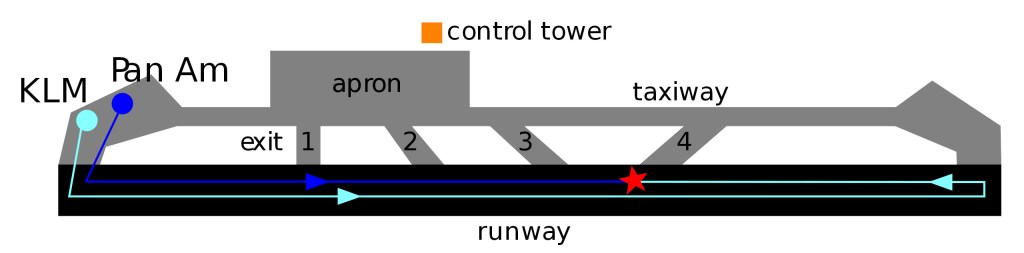
- When the KLM B747 was finally ready to depart, both aircraft were cleared to backtrack on the runway, as the apron was still blocked.
- The Pan Am B747 taxied second and was requested to turn off at taxiway 3, but missed the sharp turn and continued to taxiway 4. ATC instructed them to report when clear of the runway.
- The KLM aircraft backtracked all the way to the runway end and turned around. The commander assumed the aircraft was cleared for take-off, and was unaware of the Pan Am Boeing still on the runway.
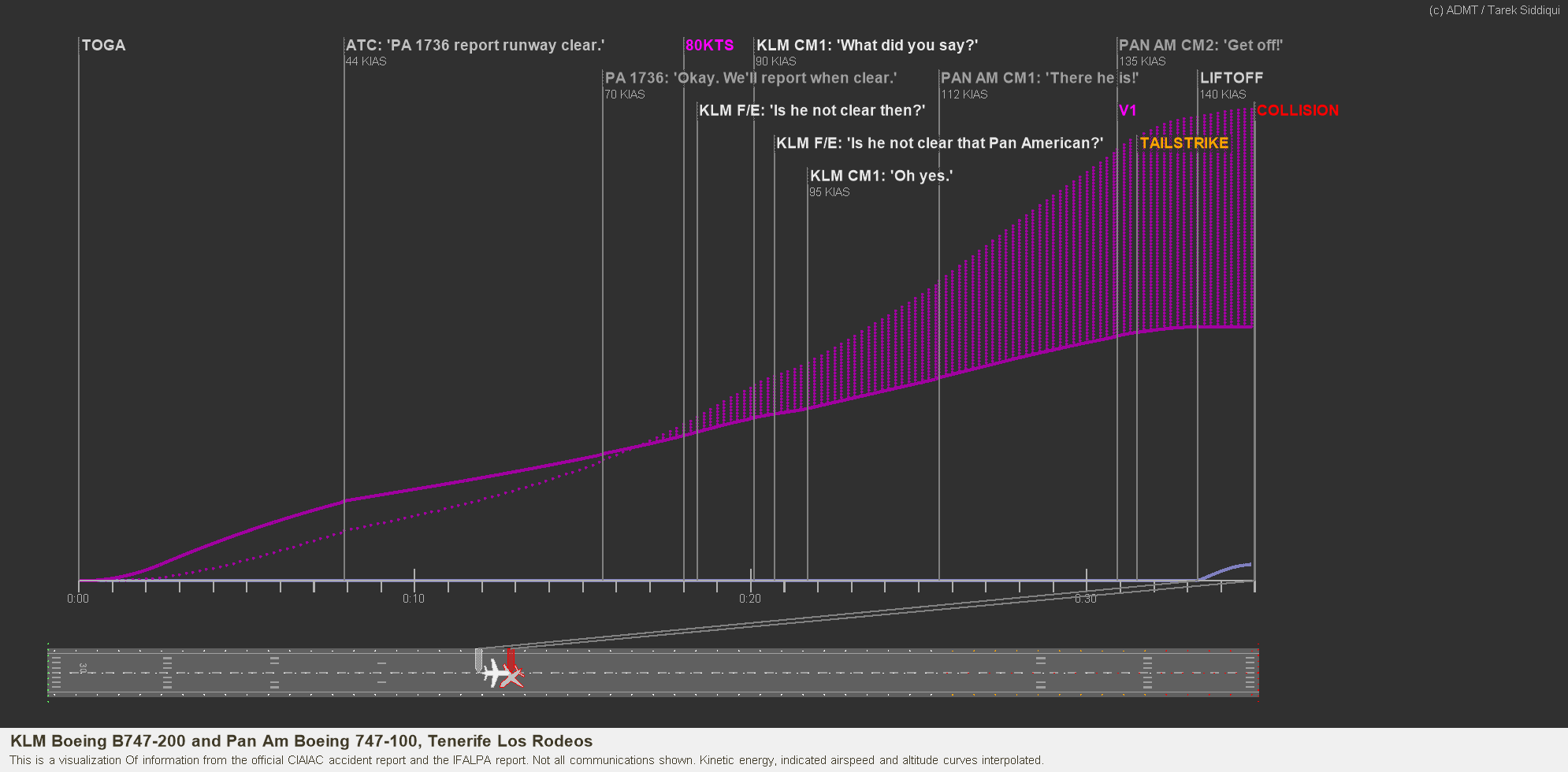
- While the KLM first officer read back the route clearance, the commander applied thrust and started the take-off run.
- This was questioned by the flight engineer, but not with sufficient insistance. The commander’s role as head of KLM’s flight training department may have made it more difficult for his crew to challenge him.
- Approximately 9.5 seconds before the collision and 4 seconds prior to V1, the two aircraft first became visible to each other.
- The Pan Am crew attempted to turn and steer the aircraft clear of the runway.
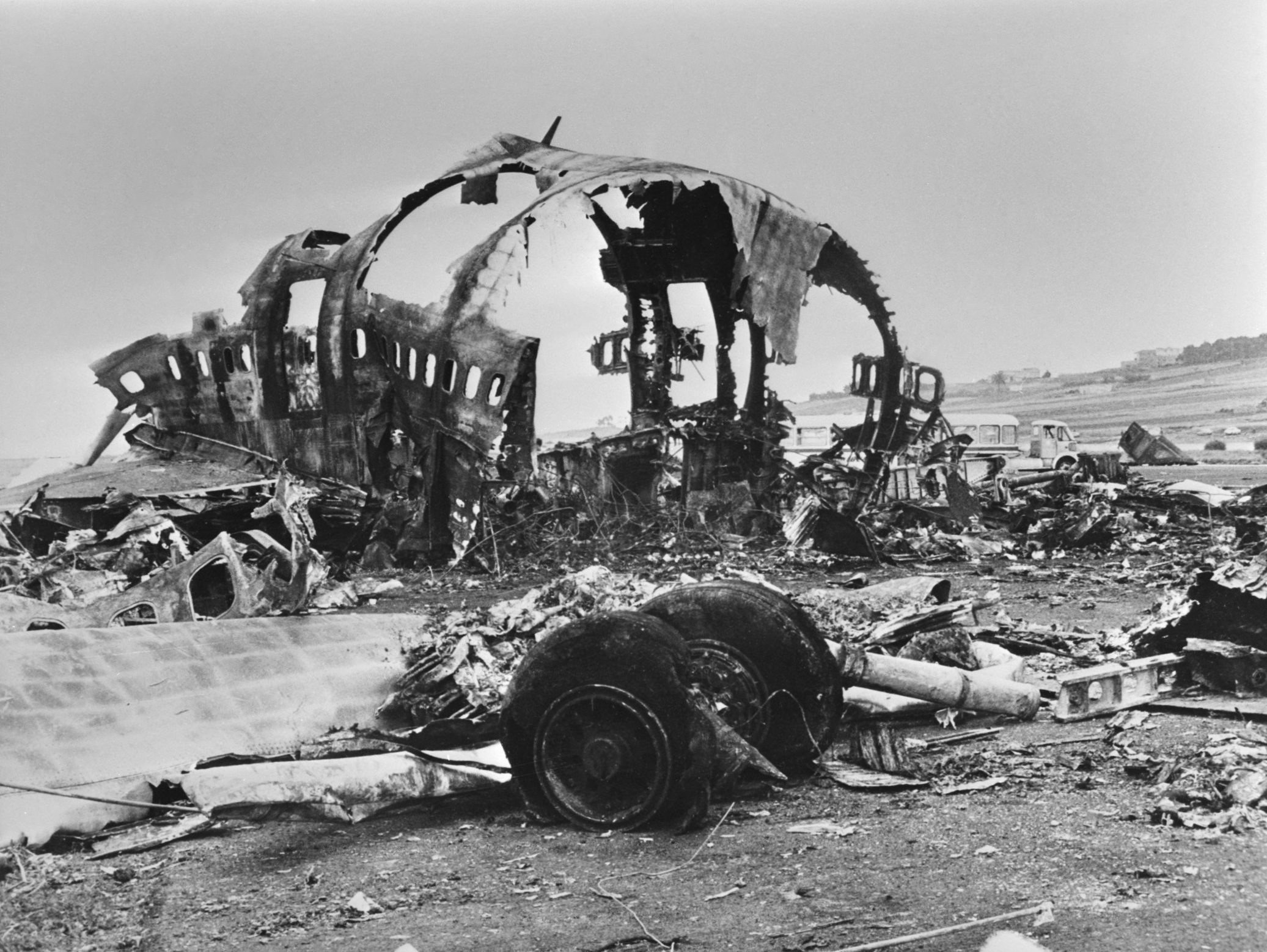
- The KLM commander attempted to rotate at 140 KIAS, striking the tail. The Boeing eventually got airborne less than 100 meters from the Pan Am aircraft, but collided with its fuselage, crashed, and caught fire.
Outcome
- Both aircraft destroyed
- 583 fatalities
- 61 survivors (all of them aboard then Pan Am aircraft)
Would it have been an option to abort the take-off once the other aircraft was in view?
More Accidents and Incidents – Continued Take-offs
The purpose of this short presentation is to focus on threats and challenges in RTO decision making. It is not the intention to judge the performance of the crew at any time or in any way.
Source and detailled information: Official Report (CIAIAC Spain); IFALPA Report; see Wikipedia for a summary and other sources.
 ADMT
ADMT 