
Rejected Take-off above V1 (justified)
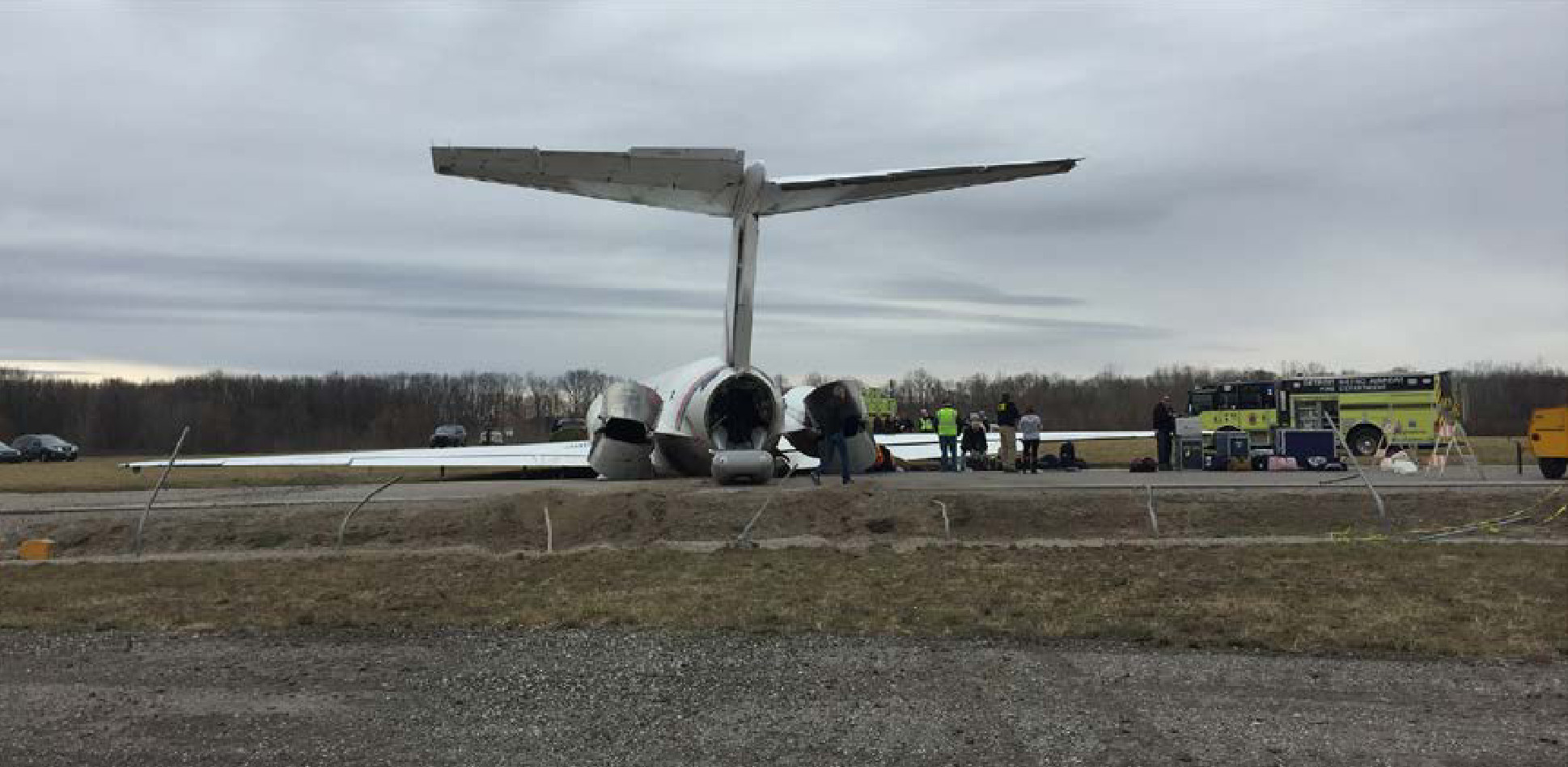
Ameristar Boeing MD-83, Ypsilanti, Michigan, USA
Conditions and Environment
KYIP 081653Z 26035G50KT 10SM CLR 11/M11 A2981 RMK AO2 PK WND 26055/1639 SLP095 T01061106
- Generally good conditions: Daylight, good visibilities, strong quartering headwind.
- No precipitation.
- No known aircraft deficiencies, flight control check performed.
- Experienced crew with the commander as Pilot Flying and a check airman in the right seat.
- Take-off on runway 23L, 2300×45 meters.
Incident/Accident
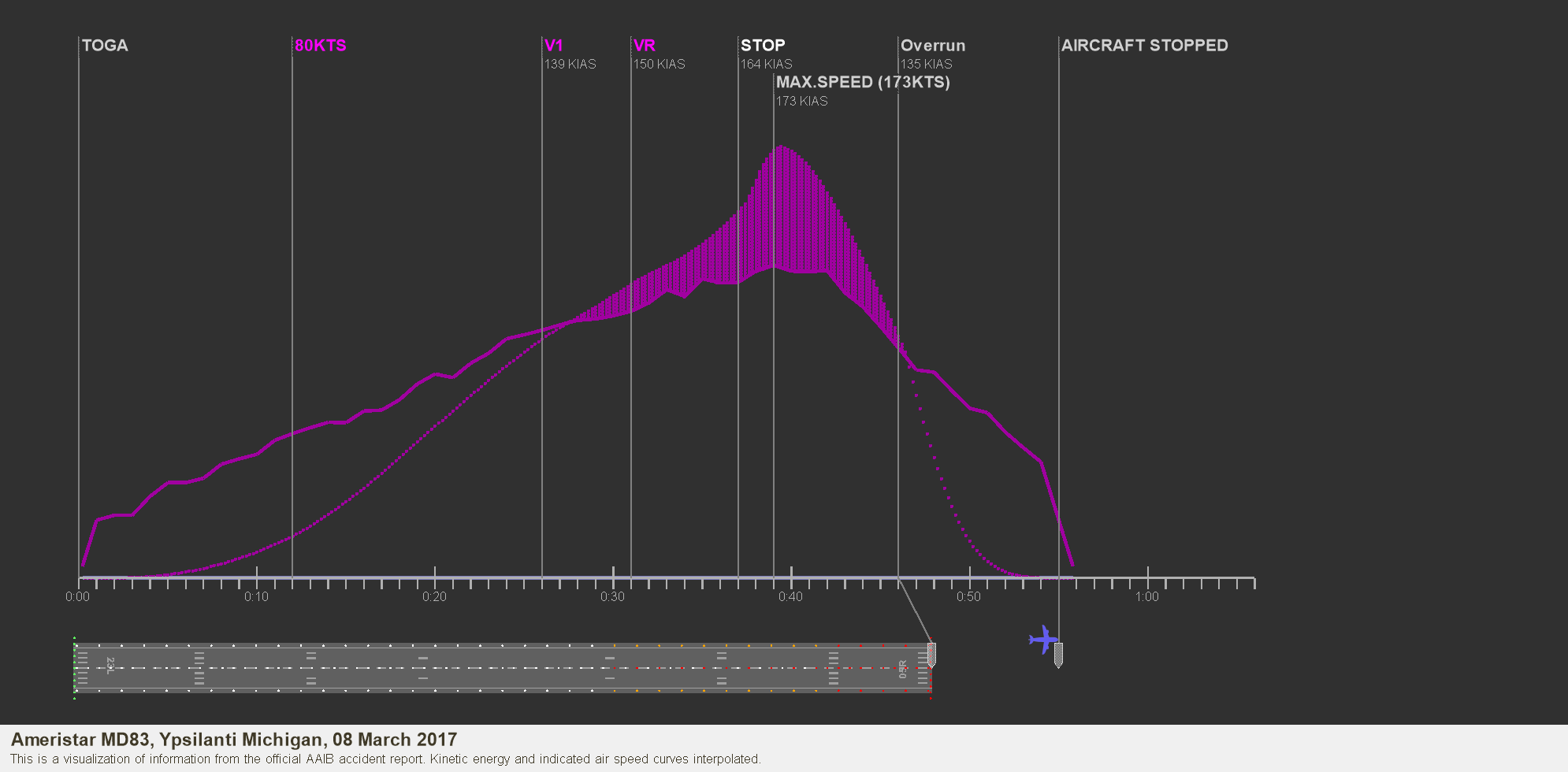
- V1 was calculated at 139, VR at 145 knots.
- Due to the strong headwind, the flight crew agreed to increase VR to 150 knots.
- As VR was called out, the Pilot Flying found it impossible to pitch up and called “hey, what’s going on!”.
- Seven seconds after VR, the PF called “Abort”; maximum speed reached was 173 KIAS.
Outcome
- The report came to the conclusion the right elevator was jammed, leaving the airplane unable to rotate.
- This was not detectable during the flight controls check due to the specific design of the MD83’s flight control system.
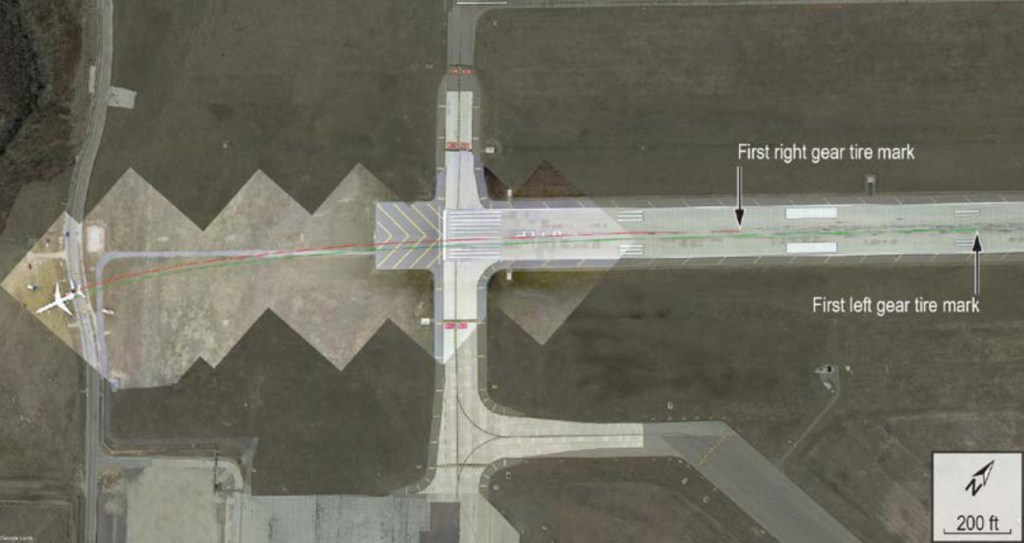
- The runway end was reached at a ground speed of 100 knots and overrun by 340 meters.
- Nose and main gear collapsed, substantial airframe damage.
- One passenger sustained minor injuries during the evacuation.
- Causal for the mild outcome: Good RTO procedures and decision making, headwind, recent major improvement of the runway safety at a cost of $20.000.000, sports team aboard reacting quickly to the evacuation situation (able-bodied passengers).
How likely is a situation like this?
More Accidents and Incidents – Rejected take-offs above V1 (justified)
The purpose of this short presentation is to focus on threats and challenges in RTO decision making. It is not the intention to judge the performance of the crew at any time or in any way.
Source and detailled information: Official Report (NTSB); see the Aviation Herald for a summary.
 ADMT
ADMT 