
Low Speed Rejected Take-off
Laudamotion Airbus A320-200, Stansted

Conditions and Environment
- Night, otherwise good conditions, light headwind.
- No aircraft deficiencies known prior to take-off.
- Experienced commander, first officer in line training, cabin crew with relatively little experience.
- Take-off on runway 22.
Incident/Accident
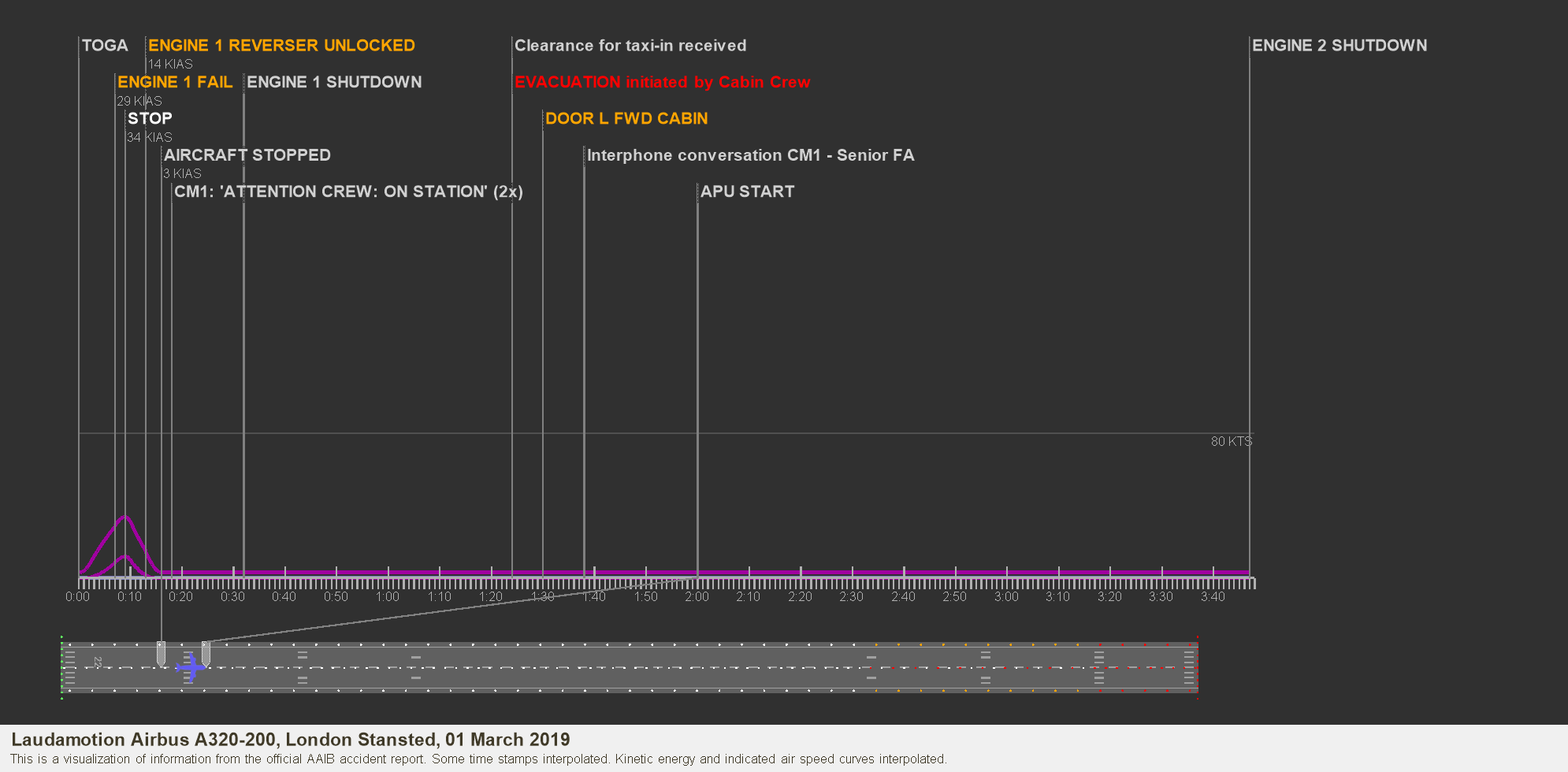
- At 31 knots ground speed, a loud bang was heard as the left engine failed
- The take-off was rejected, the cabin crew and ATC were alerted, and the correct checklists were performed.
- Due to miscommunication in the dark cabin, the cabin crew member in charge initiated an evacuation without consulting the flight crew.
- The commander became aware of the ongoing evacuation and called the cabin crew via interphone.
- During this exchange and for another 137 seconds, the right engine remained running before the flight crew shut it down.
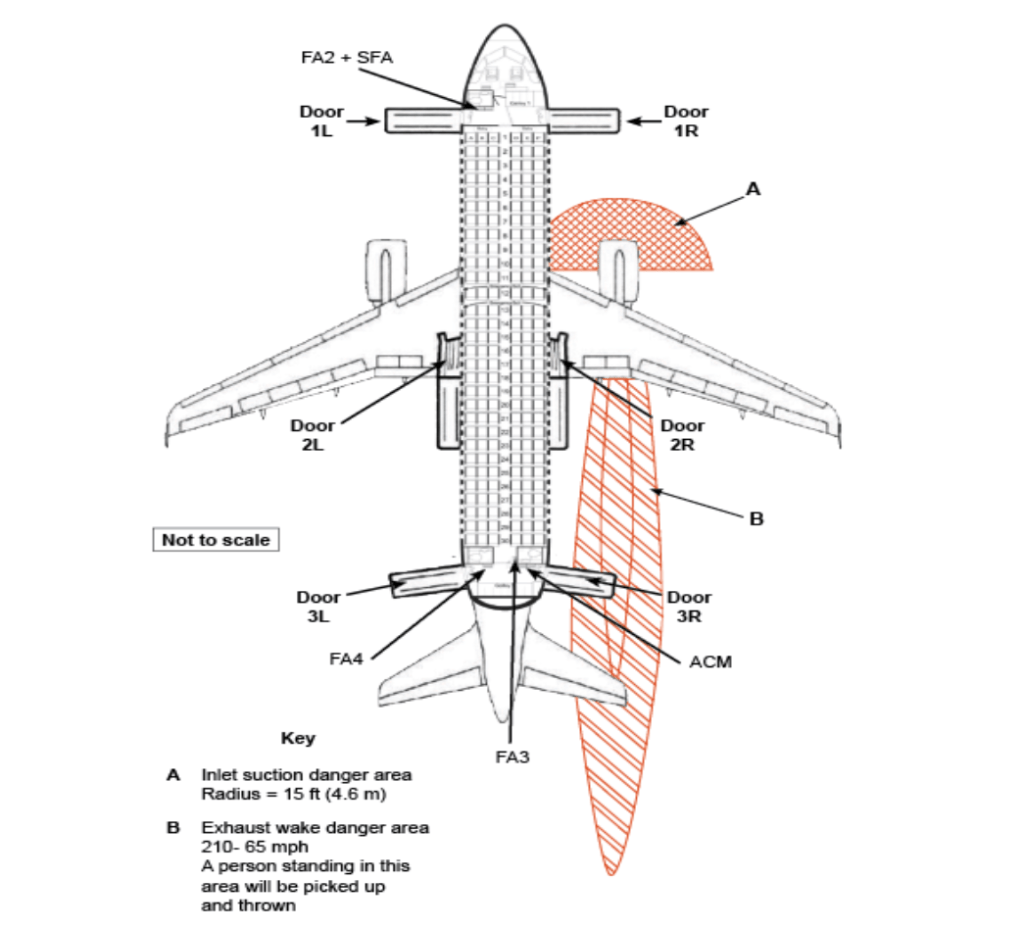
- As doors on the right side were used, the aft slide and evacuating passengers were within the danger area of the right engine.
- Serious danger also to passengers disekmbarking using door 1R due to the suction area of the right engine.
Outcome
- Minor injuries to ten passengers.
- Several findings with regard to cabin crew training, experience and qualification that may have contributed to the unwarranted evacuation.
What are the inherent risks of any RTO and how can we deal with them? Is it possible to stop an evacuation once it is started?
More Accidents and Incidents – Low Speed Rejected Take-offs
The purpose of this short presentation is to focus on threats and challenges in RTO decision making. It is not the intention to judge the performance of the crew at any time or in any way.
Source and detailled information: Official Report (AAIB UK); see the Aviation Herald for a summary.
 ADMT
ADMT 